
Acacia vs Teak: Choosing the Right Wood for Chopping Boards
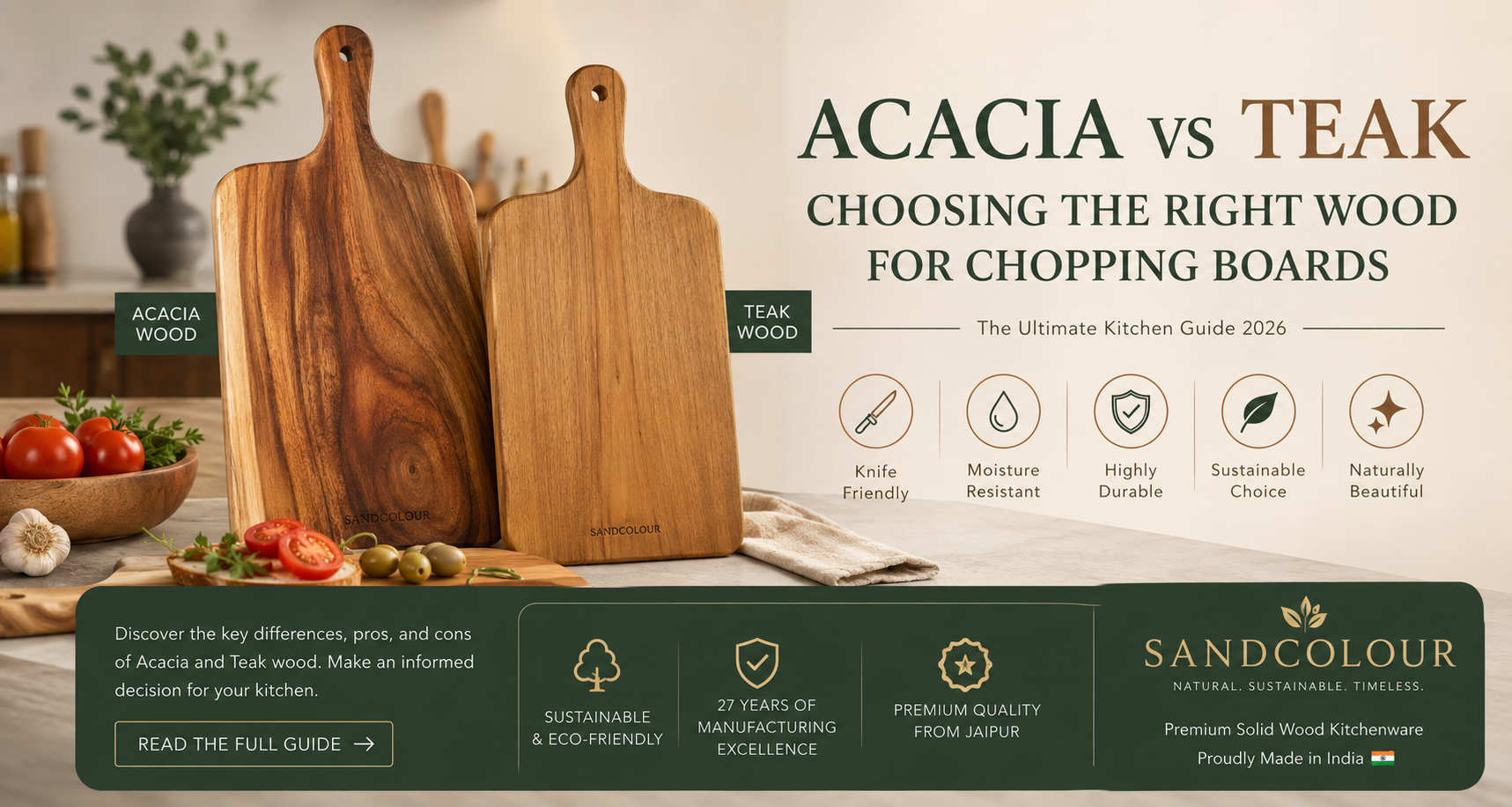
Acacia vs Teak: Choosing the Right Wood for Chopping Boards
In 2026, the culinary world has definitively spoken: plastic cutting surfaces are out, and natural solid wood is in. Professional chefs and home cooks alike are upgrading their kitchens with high-quality wooden boards that protect their knives and keep their food safe from microplastics.
When you decide to buy online, you will quickly notice two dominant hardwoods taking center stage: Acacia and Teak. Both are celebrated for their incredible durability and stunning aesthetics, but which one is truly the best for your daily prep work?
Drawing from our 27 years of manufacturing excellence in Jaipur under the Purewood Furniture Company, Sandcolour breaks down the ultimate kitchen debate: Acacia vs Teak.
What Makes a Good Chopping Board?
Before comparing specific woods, it is essential to understand what makes a chopping board functional and safe. The best wooden chopping boards must balance four key properties:
-
Knife Friendliness: The wood must be dense enough to resist deep gouges, but forgiving enough not to dull your expensive chef's knives.
-
Moisture Resistance: Kitchen boards are washed frequently. The wood needs natural oils or a tight grain to prevent water absorption, which causes warping and cracking.
-
Durability (Janka Hardness): The board needs to withstand daily chopping, dicing, and heavy cleaver strikes without splitting.
-
Food Safety and Hygiene: The wood should possess natural antibacterial properties and closed pores to prevent bacteria from multiplying.
Explore how Acacia and Teak stack up against these crucial metrics using our interactive comparison tool below:
Key insight: While Teak offers unparalleled moisture resistance, Acacia provides the best balance of knife friendliness, sustainability, and value for daily kitchen use.
Teak Wood: The Premium Investment
Teak (Tectona grandis) is globally renowned as the king of hardwoods, historically used for boat building due to its legendary water resistance.
The Pros of Teak:
-
Incredible Moisture Resistance: Teak retains high levels of natural rubber and oils, making it almost entirely waterproof. It requires significantly less oiling than other woods.
-
Low Maintenance: Because it repels water so efficiently, it is highly resistant to rot, mold, and warping.
-
Durability: It is an incredibly hard wood that will easily last a lifetime.
The Cons of Teak:
-
Harsh on Knives: Teak has a high silica content. While this makes it durable, silica acts like microscopic sandpaper, dulling your knives much faster than other woods.
-
High Cost & Sustainability Issues: Genuine, sustainably sourced Teak is exceptionally expensive and slow-growing, making it a heavy investment.
Acacia Wood: The Top Choice for Modern Kitchens
Acacia is rapidly becoming the most popular choice for high-end kitchenware, and for good reason. It offers a spectacular mix of performance and eco-conscious sourcing.
The Pros of Acacia:
-
Perfect Knife Balance: Acacia is a dense hardwood, yet it lacks the high silica content of Teak. This means it provides a sturdy cutting surface that protects your blade's sharp edge.
-
Breathtaking Aesthetics: Acacia features deep, contrasting grain patterns ranging from golden amber to rich dark chocolate, making it double perfectly as a luxury serving platter.
-
Highly Sustainable: Acacia trees grow rapidly and thrive in diverse climates without excessive resources. This makes it a highly eco-friendly option.
-
Naturally Antibacterial: The dense grain naturally inhibits the growth of trapped bacteria.
The Cons of Acacia:
-
Requires Routine Maintenance: Acacia needs to be treated with white mineral oil or beeswax once a month to lock in moisture and prevent it from drying out.
The Verdict: Which Should You Buy Online?
If you want a board that requires almost zero maintenance and you do not mind sharpening your knives frequently, Teak is a formidable, albeit expensive, option.
However, if you are looking for the best all-around performer, Acacia wood is the undisputed winner. It preserves your expensive cutlery, offers stunning natural beauty for presentation, and aligns with modern sustainable living.
Frequently Asked Questions
Is Acacia wood good for a cutting board? Yes, Acacia is considered one of the best woods for cutting boards. It is highly durable, naturally antibacterial, and gentle on knife edges, making it ideal for daily kitchen prep.
Does Teak wood dull knives? Yes. Teak contains natural silica, which gives the wood its legendary water resistance but acts as an abrasive against steel, dulling chef's knives faster than woods like Acacia or Walnut.
How do I clean my solid wood chopping board? Never place a wooden board in the dishwasher. Wash it by hand with warm water and mild dish soap, dry it immediately with a towel, and let it stand upright to air dry completely.
Upgrade Your Culinary Setup with Sandcolour
Your kitchen deserves the finest materials, crafted with precision and respect for nature. As a leading manufacturer in Jaipur, Sandcolour brings you the top sustainable kitchen essentials designed for the modern home.
Shop Sandcolour’s Premium Solid Acacia Wood Chopping Boards Here
