
Why Your Chopping Board Keeps Cracking (And How to Prevent It)
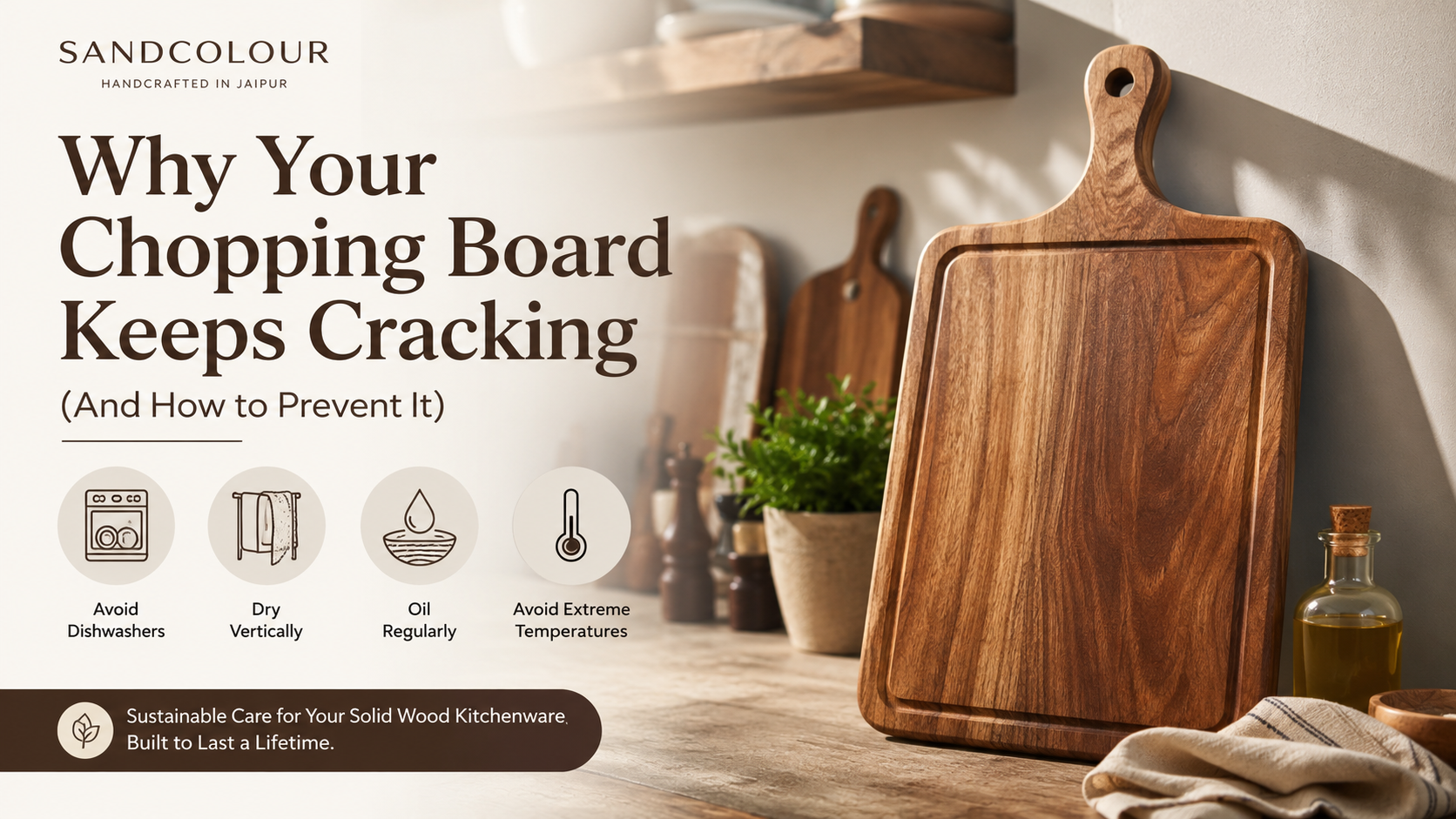
Why Your Chopping Board Keeps Cracking (And How to Prevent It)
You invested in a beautiful, handcrafted solid wood chopping board. It looked stunning on your kitchen counter, and it felt perfect under the blade of your chef’s knife. But a few months later, you noticed it—a hairline fracture running across the wood grain.
Don’t panic. A cracked board doesn’t necessarily mean the quality was poor. It usually means the wood was "thirsty" or handled in a way that disrupted its natural moisture balance. As master furniture and kitchenware manufacturers in Jaipur, Sandcolour understands the nature of wood better than anyone. Here is why your board is cracking and, more importantly, how you can stop it.
Why Do Wooden Chopping Boards Crack?
Wood is a living material. Even after it is crafted into a board, it continues to "breathe" by absorbing and releasing moisture. Cracking typically occurs when the wood experiences extreme stress:
-
The Dishwasher Effect: High-pressure hot water and aggressive drying cycles strip the wood of its natural oils, leading to rapid contraction and splitting.
-
Uneven Drying: If you wash one side of the board and leave it flat on the counter to dry, the moisture gets trapped underneath while the top dries out. The uneven tension causes the board to warp and crack.
-
Extreme Temperature Fluctuations: Placing your board next to a hot stove or in front of an air conditioner can dry out the fibers too quickly.
-
Lack of Oiling: If the wood fibers are not sealed with food-grade oil, they remain porous and prone to absorbing liquids, then drying out, causing the grain to snap.
How to Prevent Cracking (The Sandcolour Protocol)
Proper wood care is an act of preservation. By following these manufacturer-approved steps, you can ensure your solid wood chopping board lasts for decades.
-
Hand Wash Exclusively: Never, ever put a wooden board in the dishwasher. Wash gently with warm water, mild soap, and a soft sponge.
-
Dry Vertically: After washing, pat the board dry immediately and let it air dry by standing it upright on a rack. This ensures air hits both sides of the board, allowing for even drying.
-
Oil Regularly: Think of oiling as "hydration" for your board. Use food-grade white mineral oil. Monthly application creates a water-repellent seal that prevents the wood from drying out or absorbing food odors.
-
Storage: Keep your board in a cool, dry place away from direct sunlight and extreme heat sources like ovens or stoves.
Why Sandcolour Boards Are Different
At our Jaipur-based manufacturing facility, we don't just cut wood; we curate it. Our 27-year heritage in the furniture industry means we understand how to handle premium hardwoods like Acacia and Sheesham.
Every Sandcolour chopping board undergoes a rigorous kiln-seasoning process. This ensures that the timber enters your kitchen at the optimal moisture level, making it far more resistant to the cracks that plague mass-market boards.
Frequently Asked Questions
Can a cracked wooden chopping board be fixed? Minor surface cracks can often be mitigated. Lightly sand the area with fine-grit sandpaper, clean away the dust, and generously oil it with food-grade mineral oil. Deep structural cracks, however, may indicate the board has reached the end of its life.
How often should I oil my wooden chopping board? For daily use, oil your board at least once a month. If the wood starts to look "pale," "chalky," or feels rough to the touch, it is a sign that it is dehydrated and needs immediate oiling.
Is Acacia better than plastic for chopping? Yes. Acacia wood is dense, naturally antibacterial, and preserves your knife's edge. Unlike plastic, it doesn't leave microplastic shavings in your food and is far more sustainable for the environment.
Invest in Quality Kitchen Essentials
Your kitchen tools should be as resilient as your culinary skills. By choosing sustainably handcrafted wood, you are opting for quality that honors nature.
[Shop Sandcolour’s Premium Solid Acacia Wood Chopping Boards Here]
)